
GRANITE: Deep time, made visible.
There’s a moment most people have when they begin their Freycinet Walking Tour. They look out from that first stop at Honeymoon Bay, pink Hazards against bright white sandy bays, clear blue water, and just pause for a second. That feeling, that bit of awe, it all sits on one thing in my opinion: granite.
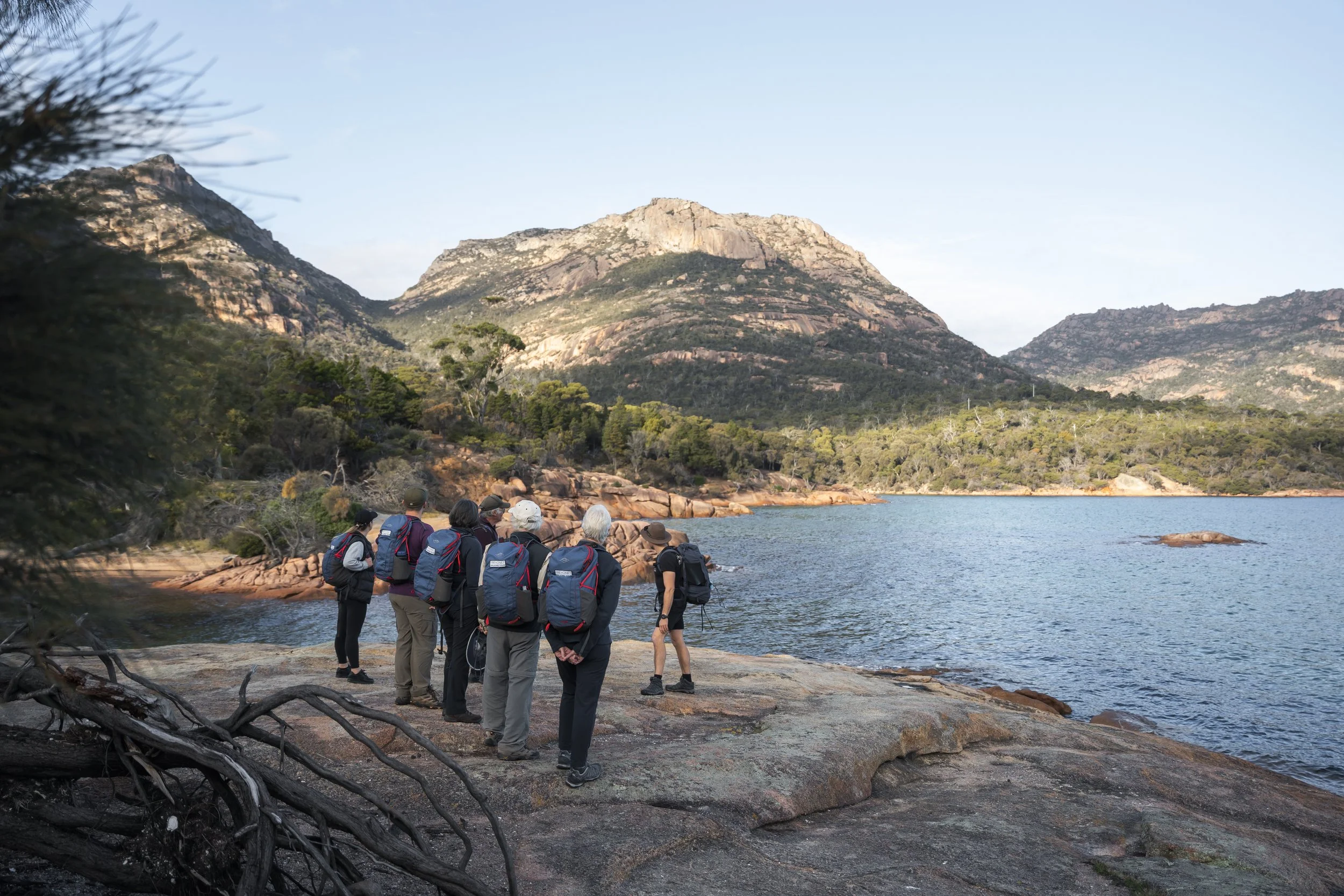
Granite is everywhere globally (present across all continents, which make up ~40% of Earth’s surface, with the rest mostly oceanic crust), it’s basically what continents are made of. But Freycinet’s a bit different. You don’t often get this combo of pink feldspar-rich granite, right on the coast, with white quartz beaches and really clear, low-nutrient water. That mix is what makes it stand out.
Around 400 million years ago (Devonian Period), none of this looked like it does now. Deep underground, molten rock cooled really slowly (over thousands to millions of years) and formed granite. It’s actually recycled crust, older rocks were partially melted and re-formed. What you see now is that process exposed (through uplift and erosion).
Granite itself is pretty simple, three main minerals. Quartz (hard, sticks around), feldspar (that’s the pink in this case), and mica (breaks down more easily). That balance in how the minerals weather helps drive everything else you see here.
Granite itself is pretty simple, three main minerals. Quartz (hard, sticks around), feldspar (that’s the pink in this case), and mica (breaks down more easily). That balance in how the minerals weather helps drive everything else you see here.
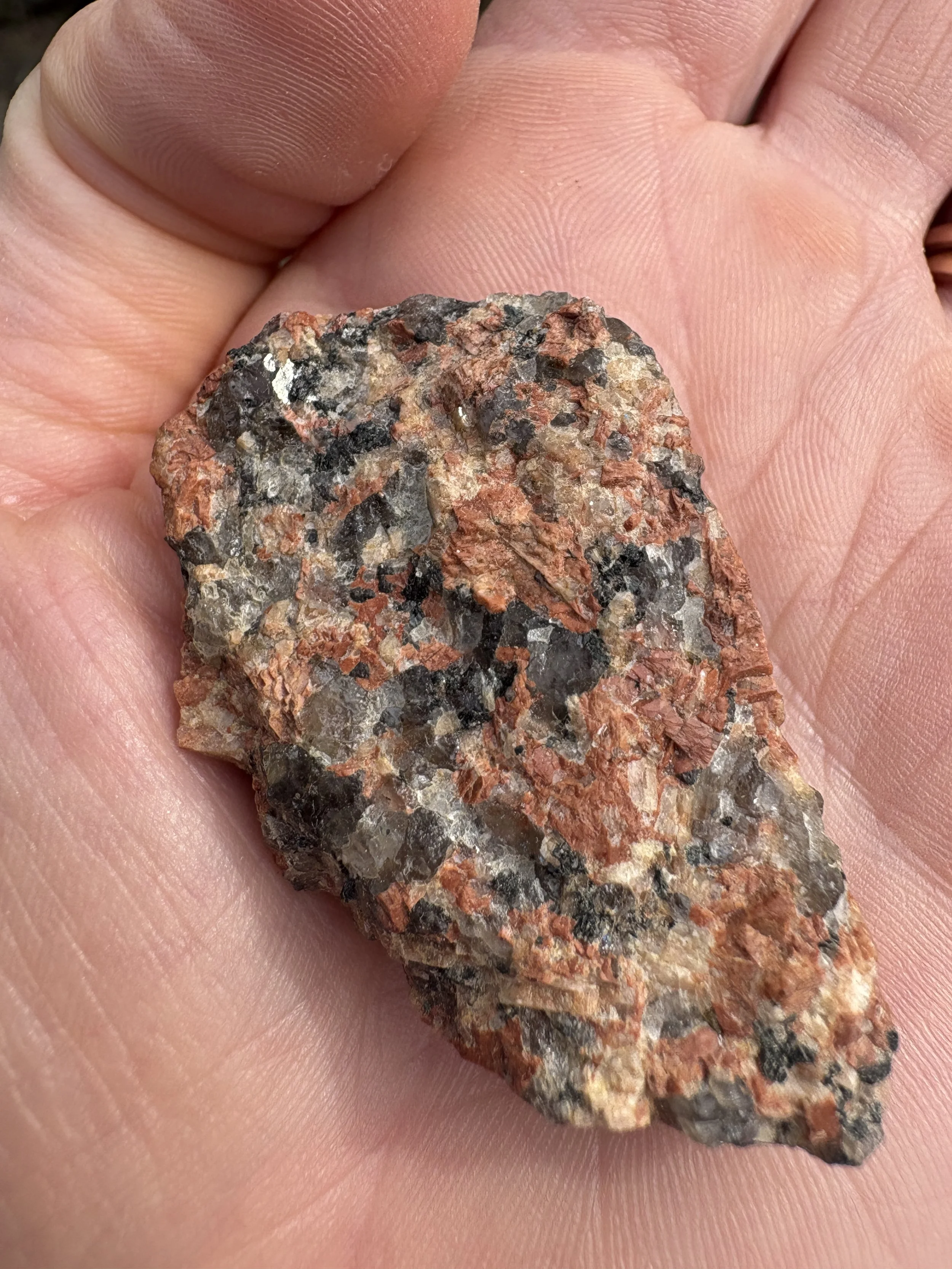
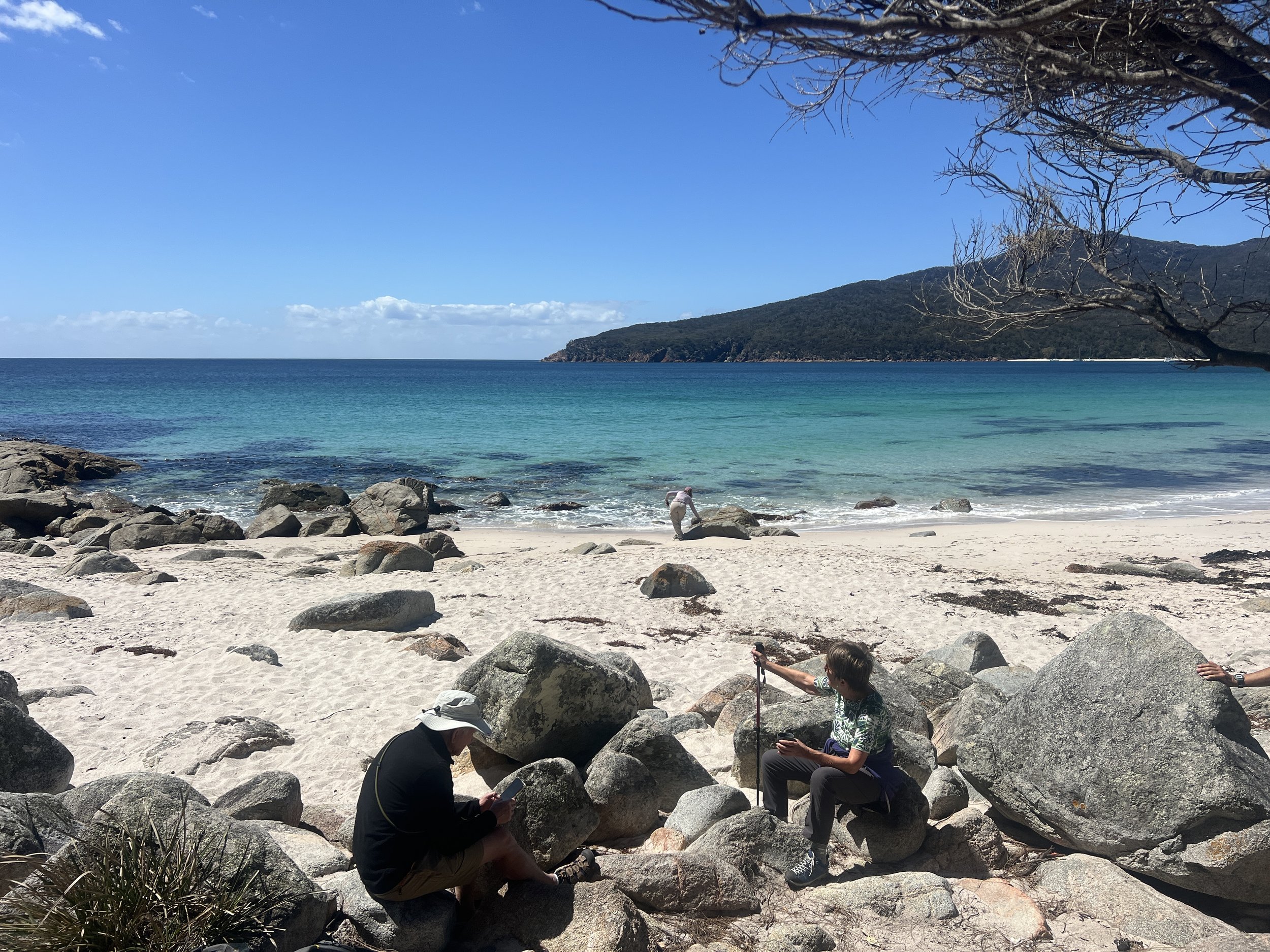
As the granite breaks down, feldspar turns to clay and washes away, quartz stays. Over time that builds up into the white sand at Wineglass Bay. Because there’s relatively little fine sediment or nutrients (nitrogen and phosphorus that fuel algae growth) washing off the granite, the water stays really clear, that deep blue you see.
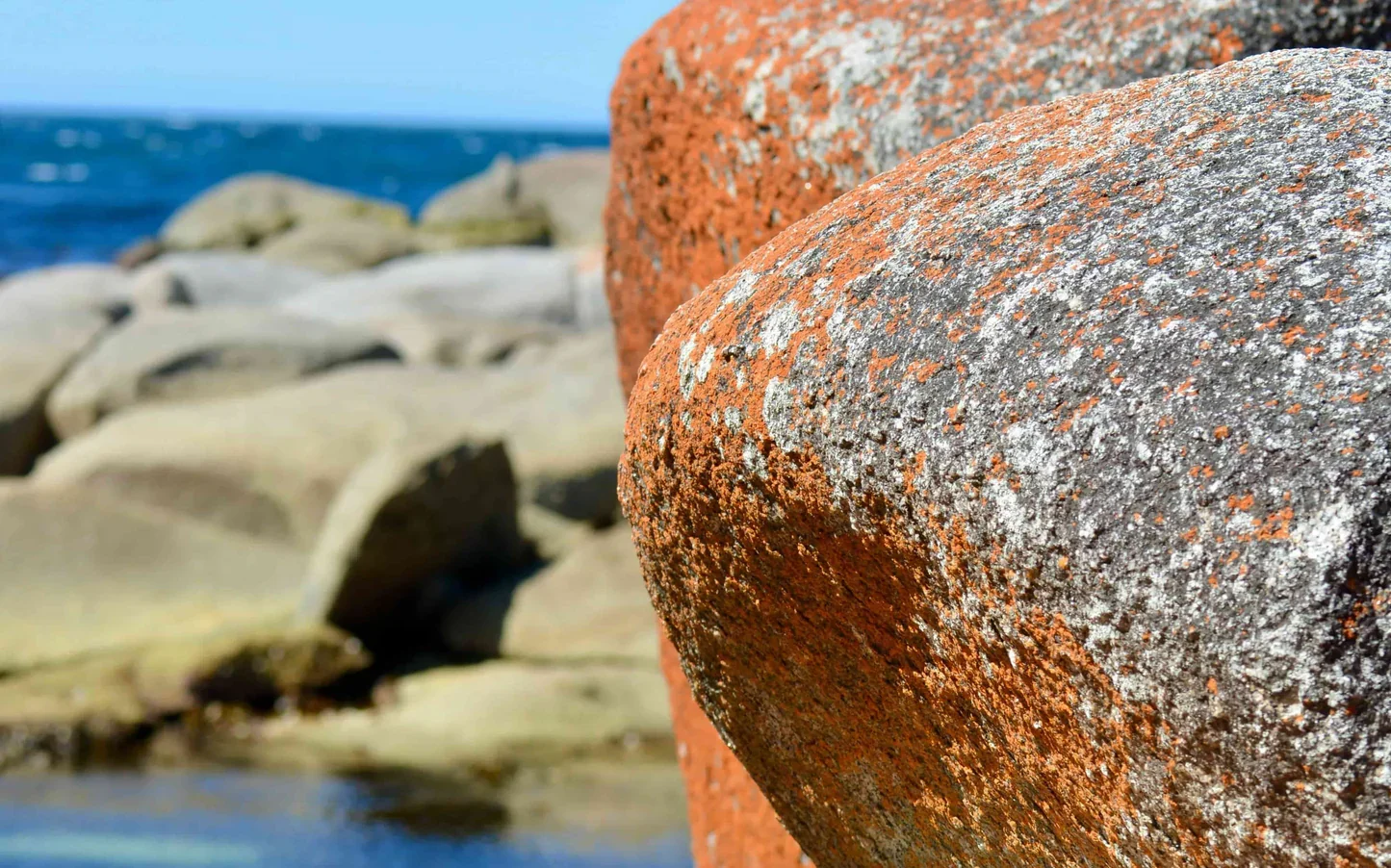
It also affects the vegetation. Granite soils are sandy and relatively low in nutrients, so plants have to work with that. You get tougher, slower-growing species, and those stunted trees in exposed areas (where wind, salt, and poor soils limit growth). Even on the bare rock itself, where there’s no soil at all, the orange colour you see is mostly lichen growing on the granite (a partnership between fungi and algae that can live directly on rock, thriving in clean air and relatively untouched conditions).
The shapes of the landscape come from the rock too. Granite cracks into blocks, water gets into the fractures, and edges weather and round off over time. That’s what gives you the domes, the balanced boulders, all those sculpted forms you see in the Hazards.
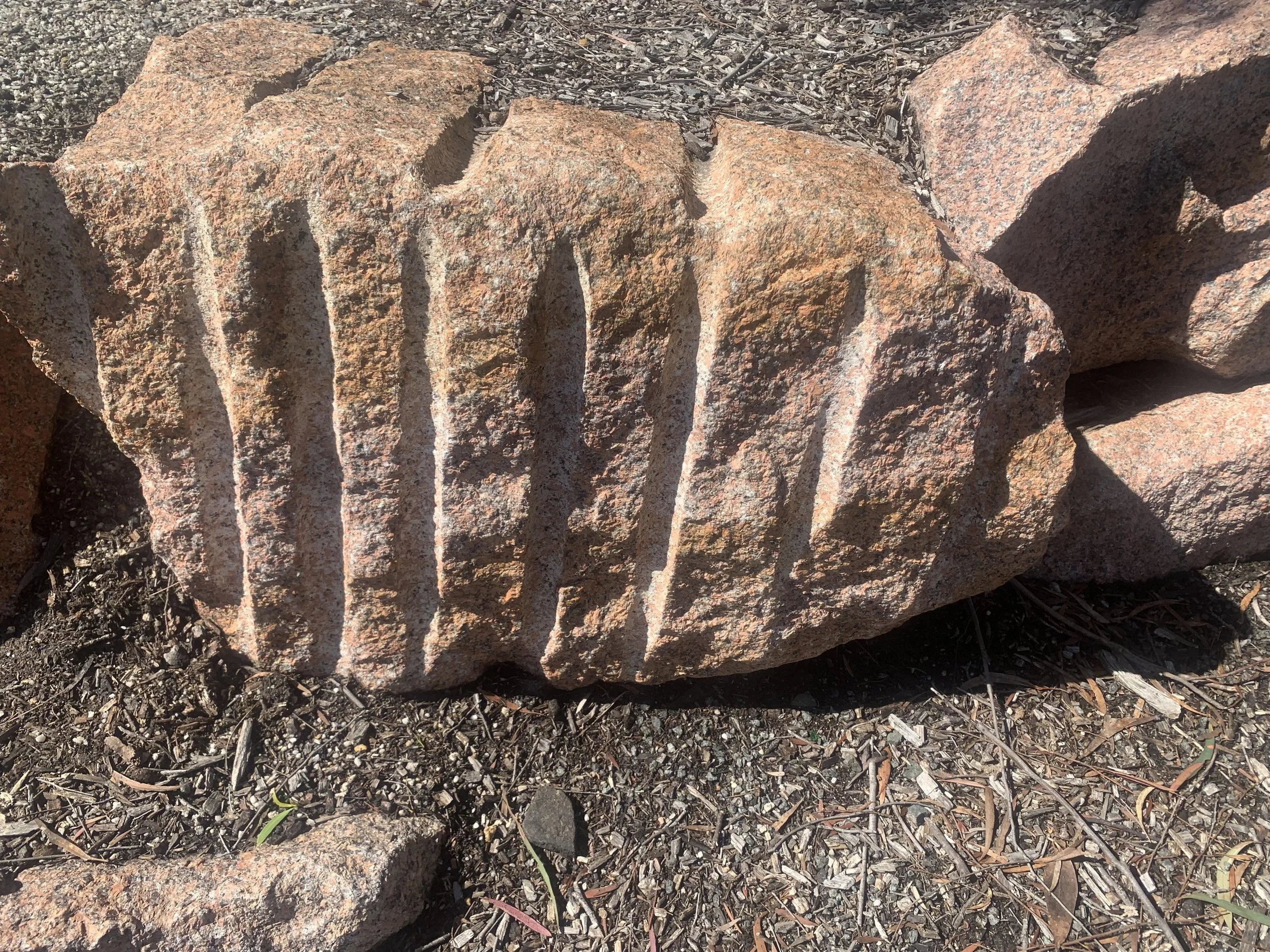
People have used it as well. A granite quarry operated here from the 1930s, with Italian stonemasons involved, cutting blocks for building stone, with material shipped out by sea. Quarrying relied on the way the granite naturally fractures (holes were drilled and wedges used to split it along its joints). For the same reasons, it’s strong, durable, and predictable.
People have used it as well. A granite quarry operated here from the 1930s, with Italian stonemasons involved, cutting blocks for building stone, with material shipped out by sea. Quarrying relied on the way the granite naturally fractures (holes were drilled and wedges used to split it along its joints). For the same reasons, it’s strong, durable, and predictable.
At the end of the day, it all ties back to the same granite. It shapes the mountains, the beaches, the water, even the plants. The place looks the way it does because of it. And that feeling you get when you first look out, standing there, taking it all in, that’s not random, that’s deep time and process made visible.